Pilonidal Sinus Excision · Sterling Hospitals · Vadodara

Pilonidal Sinus Surgery in Vadodara

Surgical excision and closure of pilonidal sinus disease — the sacrococcygeal in-grown hair cyst that causes pain, abscess and chronic discharge. Performed at Sterling Hospitals, Vadodara with low recurrence techniques.

FRCS (UK) · FACS (USA) 25+ years · 8,000+ surgeries Sterling Hospitals, Vadodara
LigaSure Surgery for Piles Vadodara Dr Samir Contractor
45 min
Procedure Duration
24–48hrs
Hospital Stay
7–10 days
Return to Work
About the procedure

What is a pilonidal sinus?

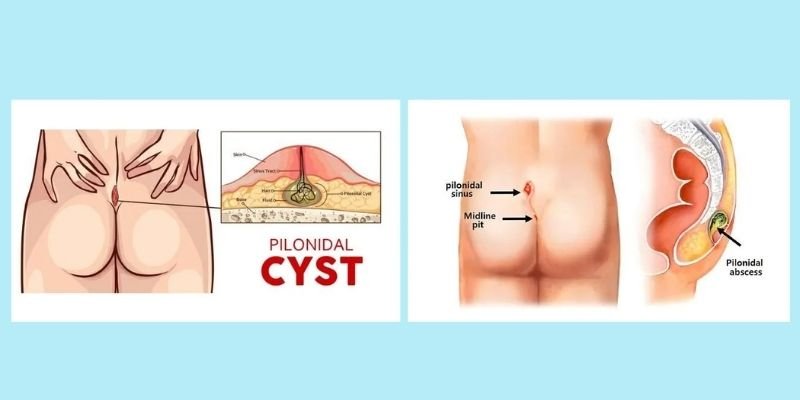
A pilonidal sinus (also called pilonidal cyst or pilonidal disease) is a small tunnel or hole in the skin in the crease between the buttocks (the sacrococcygeal region), typically containing hair, skin debris and bacteria. "Pilonidal" means "nest of hair." The condition is caused by in-grown hairs that penetrate the skin, trigger an inflammatory reaction, and create a sinus tract lined with granulation tissue.

Pilonidal disease ranges from an asymptomatic pit to a large infected abscess or chronic discharging sinus. Acute pilonidal abscess causes severe pain and swelling that requires emergency drainage. Chronic pilonidal sinus causes persistent or intermittent discharge, swelling and discomfort that prevents comfortable sitting or driving.

Surgery is the definitive treatment. The appropriate technique depends on whether the disease is acute (incision and drainage of abscess) or chronic (complete excision of the sinus and tracks, with primary closure or healing by secondary intention). Laser treatment of pit tracts is also available for selected cases of minimal disease.
Young adults
Most common in 15–35 age group
Particularly common in young men with coarse body hair and sedentary occupations.
Primary closure
Preferred technique for most cases
Wide excision with primary closure gives fastest recovery in non-infected disease.
7–10 days
Return to desk work
Vs 6–8 weeks for open healing techniques.
Why trust this content

Experience · Expertise · Authority · Trust

Every page on this site is written and medically reviewed by Dr Samir Contractor — a practising fellowship-trained surgeon — not by a content agency. Here is the evidence behind that claim.

E

Experience

Over 25 years of continuous surgical practice at Sterling Hospitals, Vadodara. Every claim on this page is drawn from direct clinical experience — not textbook paraphrasing.

25+ years in active surgical practice
8,000+ total procedures performed
5,000+ laparoscopic procedures
400+ bariatric procedures (sleeve & bypass)
1,500+ anorectal procedures
Senior Consultant, Sterling Hospitals since 2000
E

Expertise

Fellowship-trained at the Royal College of Surgeons of Edinburgh with subspecialty MIS training at Sir Ganga Ram Hospital, New Delhi. Board-certified in multiple countries.

MBBS — Medical College Baroda
MS (General Surgery) — Medical College Baroda
FRCS — Royal College of Surgeons, Edinburgh (UK)
FMAS — Fellow in Minimal Access Surgery
FACS — American College of Surgeons (USA)
PN1 Certified Exercise & Nutrition Coach
A

Authoritativeness

Affiliated with Sterling Hospitals — a leading multi-specialty hospital in Vadodara. Active member of recognised surgical bodies in India, the United Kingdom and the United States.

Senior Consultant, Sterling Hospitals, Vadodara
Indian Medical Association (IMA)
Indian Assoc. of GI Endo Surgeons (IAGES)
Obesity Surgery Society of India (OSSI)
Association of Surgeons of India (ASI)
General Medical Council, United Kingdom
T

Trustworthiness

Transparent pricing published on every procedure page. Surgery recommended only when clinically indicated. 4.9★ patient rating from named, verified patient reviews.

★ 4.9 average verified patient rating
Transparent package pricing on all pages
Medical disclaimer on every page
Content last reviewed: May 2026
Sterling Hospitals, Vadodara — established institution
Surgery discussed only when clinically appropriate
Qualifications
MBBS MS — General Surgery FRCS (Edinburgh, UK) FMAS FACS (USA) PN1 Certified
Memberships & Registrations
IMA IAGES ASI OSSI GMC, United Kingdom Royal College of Surgeons, Edinburgh American College of Surgeons
Who needs this procedure

Is this surgery right for you?

A consultation with Dr Samir Contractor is required for a definitive assessment of candidacy.

✓ SUITABLE Typical candidates

  • Chronic pilonidal sinus with discharge or recurrent abscess
  • Complex multi-pit pilonidal disease
  • Pilonidal abscess (incision and drainage as emergency, definitive excision after 6 weeks)
  • Recurrence after previous surgery
  • Symptomatic midline pits even without active discharge
  • Patients whose work or lifestyle is significantly impacted

✗ DISCUSS FIRST May need alternative approach

  • Completely asymptomatic isolated midline pit (watchful waiting, hair removal, hygiene measures)
  • Active abscess (drain first, excise sinus tract 6 weeks later)
  • Very extensive disease involving multiple sinuses (may need plastic surgical flap technique)
  • Patients with very poor wound healing (uncontrolled diabetes, immunosuppression — optimise first)
Why this treatment

Benefits of the surgical approach

Permanent cure for a recurrent condition

Complete excision of all sinus tracts eliminates the source of repeated abscess formation and discharge.

Primary closure — fast return to work

Sutured primary closure (for suitable cases) heals in 7–10 days — compared to 6–8 weeks of twice-daily dressing changes with open healing.

Off-midline closure reduces recurrence

Karydakis or Bascom flap techniques move the suture line off the natal cleft (the deep crease that traps hair), dramatically reducing recurrence.

Restores quality of life

Pilonidal disease prevents comfortable sitting, driving, gym and sports. Surgery frees patients from the chronic discomfort and social impact of the condition.

How it's done

The procedure, step by step

1

Anaesthesia

General, spinal or local anaesthesia depending on disease extent. Patient positioned prone (face down) for optimal access to the sacrococcygeal region.

2

Dye injection and tract mapping

Methylene blue dye is injected through the external pit to stain the sinus tract and all its branches, enabling complete excision without missing secondary tracts.

3

Wide excision

The entire pilonidal complex — pits, sinus tract, and all stained side-branches — is excised en bloc with a margin of normal tissue. Completeness of excision is the key factor in preventing recurrence.

4

Closure technique

For non-infected, first-time cases: primary closure with interrupted sutures (fastest healing — 7–10 days return to work). For recurrent or infected cases: off-midline closure techniques such as Bascom advancement flap or Karydakis procedure reduce recurrence rate to under 5%.

5

Drain and dressing

A small drain is placed in primary closures and removed after 24 hours. Dressing applied. Patient discharged after 24–48 hours.

What to expect

Your recovery timeline

Day 0–1

Surgery and discharge

Discharged after 24–48 hours. Wound dressed. Stool softener prescribed. Avoid direct pressure on the wound — use a donut cushion when sitting.

Days 2–5

Home wound care

Keep wound clean and dry. Dressing changed daily or as directed. Avoid prolonged sitting, driving, or cycling. Mild analgesics as needed.

Days 7–10

Return to desk work

Primary closure wounds are typically healed enough for desk work. Sutures removed or dissolve. Continue avoiding prolonged sitting on hard surfaces.

Week 2–4

Progressive healing

Wound fully closed. Light gym, walking fine. Avoid swimming until cleared by Dr Samir. Continue hair removal of the natal cleft area (laser hair removal recommended long-term).

Week 4–6

Full activity

Sports, gym, driving, all activities resumed. Long-term: regular hair removal and hygiene in natal cleft prevents recurrence.

Transparent pricing

Package rates at Sterling Hospitals, Vadodara

All-inclusive package costs — no hidden charges. Two room categories available. Final confirmation at consultation.

Procedure
Standard Room
Deluxe Room
Pilonidal Sinus Excision ₹68,500 ₹1,05,000
✓ Included
Surgeon fee · Anaesthesia · OT charges · Room rent (2 days) · Doctor visits · Miscellaneous
✗ Billed separately
Labs · Pharmacy · Radiology · Consumables

Packages include surgeon fee, anaesthesia, OT charges, room rent (2 days), doctor visits & miscellaneous. Excludes labs, pharmacy, radiology & consumables. Complex multi-sinus or flap procedures may vary — confirmed at consultation.

Confirm package on WhatsApp Call Sterling Hospital
Quick answers

Frequently asked questions about Pilonidal Sinus Excision

What causes a pilonidal sinus?
Pilonidal sinus is caused by loose hairs — typically coarse, curly body hair — that are driven into the skin of the natal cleft (the crease between the buttocks) by friction and pressure, particularly in people who sit for long periods (students, IT professionals, drivers). The hair creates a foreign body reaction, infection, and eventually a lined sinus tract. Risk factors include male gender, dark coarse body hair, excess body weight, prolonged sitting, and a deep natal cleft.
How is an acute pilonidal abscess treated differently from a chronic sinus?
An acute abscess requires emergency drainage — a small incision to release the pus and relieve pain, done under local anaesthesia. This is not the definitive treatment. After 6 weeks of healing, the chronic sinus tract that remains is excised definitively under general anaesthesia. Trying to do the full excision during acute infection leads to poor wound healing and high recurrence.
Will the pilonidal sinus come back after surgery?
Recurrence depends on the surgical technique. Simple midline excision (not recommended) has a high recurrence rate of 15–30%. Primary midline closure has a recurrence rate of around 10%. Off-midline closure techniques (Karydakis, Bascom) have the lowest recurrence rates — under 5% at 5 years — by moving the wound scar away from the hair-trapping midline crease. Long-term permanent hair removal of the natal cleft (laser hair removal) further reduces recurrence to near zero.
Can I avoid surgery with laser treatment of the pits?
Laser pit treatment (SiLaC — sinus laser closure) is an evolving option for minimal pilonidal disease with only pit openings and no complex sinus tracts. Success rates are good for this selected group (approximately 80% at 1 year). For established sinus tracts with multiple pits, branches, and previous infection, surgical excision remains the gold standard. Dr Samir Contractor will assess your disease at consultation and discuss whether laser pit treatment is suitable.
How long does the wound dressing need to be done?
For primary closed wounds: dressing changed daily until sutures are removed (7–10 days). After that, simple adhesive dressings for a few more days until fully sealed. For open healing wounds: dressing changes twice daily for 3–6 weeks. Home nursing visits or clinic dressing changes can be arranged. Most patients or a family member learn to change dressings comfortably with our guidance.
Patient outcomes

What patients say after their treatment

"

Recurring abscesses for three years, drained twice at a local hospital. Dr Samir did the proper excision with primary closure. Discharged the next day, back at my IT desk in 8 days. Haven't had a single recurrence in 18 months.

Y
Yash Shah
Pilonidal sinus · Vadodara
★★★★★
"

Had multiple sinus openings and was told it was complicated. Dr Samir used a flap technique and the wound healed beautifully. The pre-op counselling was excellent — I knew exactly what to expect at every stage. Very professional.

P
Priya Nair
Complex pilonidal sinus · Baroda
★★★★★
Book a consultation

Meet Dr Samir at Sterling Hospital, Vadodara.

WhatsApp gets the fastest response. For appointment booking by phone, call the Sterling Hospital reception during OPD hours.

WhatsApp (Preferred)
Replies within working hours, Mon–Sat.
Appointments — Sterling Hospital
Mon–Sat, 9:00 AM – 8:00 PM IST.
Clinic
Sterling Hospital, Opp. Inox Cinema
Race Course Circle (W), Vadodara – 390007
OPD: Monday–Saturday, 10:00 AM – 7:00 PM

Request a Consultation

Two fields. We'll reach out on WhatsApp within working hours.

SC
Dr Samir Contractor
MS FRCS (UK) FMAS FACS (USA) PN1
Sterling Hospitals, Vadodara 25+ years · 8,000+ surgeries ★ 4.9 rating
Explore more

Related procedures & services