Sleeve Gastrectomy · Bariatric Surgery · Sterling Hospitals Vadodara

Laparoscopic Sleeve Gastrectomy in Vadodara

The world's most commonly performed bariatric operation — removing 75–80% of the stomach to permanently reduce appetite and achieve sustained weight loss of 60–70% of excess body weight. Performed at Sterling Hospitals, Vadodara.

FRCS (UK) · FACS (USA) 25+ years · 8,000+ surgeries Sterling Hospitals, Vadodara
Laparoscopic Sleeve Gastrectomy at Sterling Hospitals Vadodara
60–70%
Excess Weight Lost
2–3 days
Hospital Stay
2–3 wks
Return to Work
About the procedure

What is laparoscopic sleeve gastrectomy?

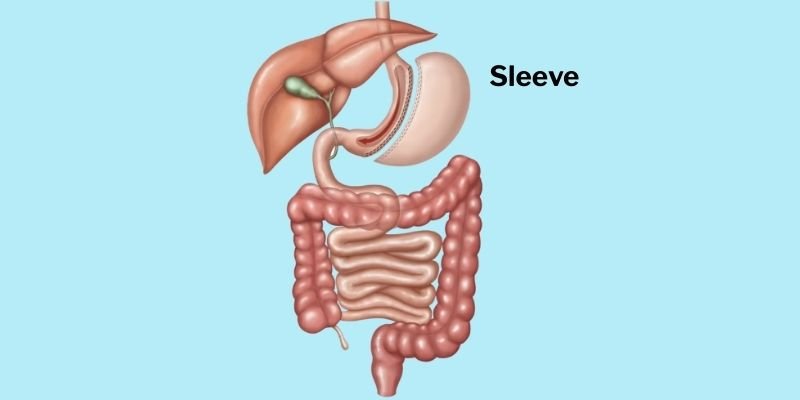
Laparoscopic sleeve gastrectomy (LSG) removes approximately 75–80% of the stomach, converting it from a large sac into a narrow "sleeve" or tube about the size and shape of a banana. This is achieved entirely via 4–5 keyhole incisions, using a laparoscopic stapler that simultaneously cuts and seals the stomach.

The sleeve works through two mechanisms. First, the dramatically reduced stomach volume means you feel full after a small meal. Second — and more importantly — the part of the stomach that is removed produces ghrelin, the primary hunger hormone. After a sleeve gastrectomy, ghrelin levels fall significantly, reducing the feeling of hunger. This hormonal change is why sleeve gastrectomy produces better weight loss than pure caloric restriction (dieting).

For Indian patients, the dietary adaptation is straightforward. By 3–4 months after surgery, most patients can eat regular Indian food in smaller portions — dal, roti, sabzi, curd, rice — with emphasis on protein-first eating at each meal. High-sugar foods, fried snacks (samosa, bhajia), maida-based items and sweetened drinks need to be avoided long-term for optimal results.
60–70%
Excess body weight lost at 2 years
Consistent with published international and Indian bariatric surgery outcomes.
80%
Diabetes improvement or remission
Most patients with type 2 diabetes see significant improvement or full remission, often within weeks of surgery.
> 10 years
Durable weight loss with lifestyle adherence
Long-term data show sustained results in patients who maintain dietary and activity habits.
Why trust this content

Experience · Expertise · Authority · Trust

Every page on this site is written and medically reviewed by Dr Samir Contractor — a practising fellowship-trained surgeon — not by a content agency. Here is the evidence behind that claim.

E

Experience

Over 25 years of continuous surgical practice at Sterling Hospitals, Vadodara. Every claim on this page is drawn from direct clinical experience — not textbook paraphrasing.

25+ years in active surgical practice
8,000+ total procedures performed
5,000+ laparoscopic procedures
400+ bariatric procedures (sleeve & bypass)
1,500+ anorectal procedures
Senior Consultant, Sterling Hospitals since 2000
E

Expertise

Fellowship-trained at the Royal College of Surgeons of Edinburgh with subspecialty MIS training at Sir Ganga Ram Hospital, New Delhi. Board-certified in multiple countries.

MBBS — Medical College Baroda
MS (General Surgery) — Medical College Baroda
FRCS — Royal College of Surgeons, Edinburgh (UK)
FMAS — Fellow in Minimal Access Surgery
FACS — American College of Surgeons (USA)
PN1 Certified Exercise & Nutrition Coach
A

Authoritativeness

Affiliated with Sterling Hospitals — a leading multi-specialty hospital in Vadodara. Active member of recognised surgical bodies in India, the United Kingdom and the United States.

Senior Consultant, Sterling Hospitals, Vadodara
Indian Medical Association (IMA)
Indian Assoc. of GI Endo Surgeons (IAGES)
Obesity Surgery Society of India (OSSI)
Association of Surgeons of India (ASI)
General Medical Council, United Kingdom
T

Trustworthiness

Transparent pricing published on every procedure page. Surgery recommended only when clinically indicated. 4.9★ patient rating from named, verified patient reviews.

★ 4.9 average verified patient rating
Transparent package pricing on all pages
Medical disclaimer on every page
Content last reviewed: May 2026
Sterling Hospitals, Vadodara — established institution
Surgery discussed only when clinically appropriate
Qualifications
MBBS MS — General Surgery FRCS (Edinburgh, UK) FMAS FACS (USA) PN1 Certified
Memberships & Registrations
IMA IAGES ASI OSSI GMC, United Kingdom Royal College of Surgeons, Edinburgh American College of Surgeons
Who needs this procedure

Is this surgery right for you?

A consultation with Dr Samir Contractor is required for a definitive assessment of candidacy.

✓ SUITABLE Typical candidates

  • BMI > 37.5 (without obesity-related conditions)
  • BMI > 32.5 with type 2 diabetes, hypertension, PCOS, sleep apnoea, fatty liver or joint disease
  • Previous non-surgical weight loss attempts with inadequate sustained results
  • Age 18–65 (younger/older considered case-by-case)
  • Medically fit for general anaesthesia
  • Committed to lifelong dietary modification and follow-up
  • Women with PCOS-related infertility seeking weight-related fertility improvement

✗ DISCUSS FIRST May need alternative approach

  • BMI below 30 (medical management recommended first)
  • Severe GERD or large hiatus hernia (gastric bypass preferred)
  • Uncontrolled psychiatric disorder affecting decision-making
  • Active alcohol or substance dependency (require treatment first)
  • Pregnancy (surgery deferred until post-partum)
  • Severe coagulopathy or uncontrolled medical condition
Why this treatment

Benefits of the surgical approach

Dramatic, sustained weight loss

60–70% of excess body weight lost at 2 years — far exceeding any medication or dietary programme.

Hunger hormone reduction

Ghrelin levels fall significantly after sleeve gastrectomy — patients report a genuine reduction in hunger, not just restriction. This is the key hormonal mechanism.

Diabetes, BP and PCOS improvement

Over 80% of patients with type 2 diabetes see major improvement or remission. Hypertension resolves in 60–70%. PCOS improves in 80%. Sleep apnoea resolves in 85%.

Simpler anatomy than bypass

Sleeve gastrectomy does not reroute the intestine — it is anatomically simpler than gastric bypass, has fewer nutritional complications, and is reversible in principle if ever required.

How it's done

The procedure, step by step

1

Pre-operative workup

All sleeve gastrectomy candidates undergo full pre-operative evaluation: blood tests, endoscopy, chest X-ray, ECG, cardiology review if needed, anaesthesia review, dietitian counselling and surgical consultation. H. pylori is tested and treated before surgery.

2

General anaesthesia

Sleeve gastrectomy is performed under general anaesthesia with intubation. DVT prophylaxis (compression stockings and heparin) are given. Procedure time: approximately 60–90 minutes.

3

Port placement

4–5 small incisions of 5–12 mm are made in the upper abdomen. A liver retractor holds the left lobe of the liver to expose the stomach.

4

Greater curve mobilisation

The greater omentum and short gastric vessels are divided using an energy device, freeing the greater curve of the stomach from its attachments.

5

Sleeve creation with stapler

A calibration tube (bougie, typically 36–40 Fr) is passed through the mouth into the stomach to guide the sleeve size. A laparoscopic linear stapler fires sequentially from the antrum to the angle of His, removing 75–80% of the stomach. The staple line is the new stomach.

6

Leak test

The staple line is tested for leaks using a dye injection or air insufflation test under water. The staple line may be reinforced with suture or staple-line reinforcement material.

7

Closure and recovery

Ports removed, incisions closed. Drain placed alongside the staple line and removed the following morning if there is no concern. Patient moved to HDU for overnight monitoring, then step-down to ward on day 1.

What to expect

Your recovery timeline

Day 0–1

Surgery and HDU monitoring

Sips of water from evening of surgery. Drain and urinary catheter in place. Walking encouraged from the evening of surgery to reduce clot risk.

Days 1–2

Step down and discharge

Clear liquid diet (water, diluted juices, coconut water, thin dal water). Drain removed on day 1 if clear. Discharged day 2 or 3. Prescriptions for 2 weeks of medication and supplement.

Weeks 1–2

Full liquid diet at home

Smooth soups, dal water, buttermilk, protein shakes, thin lassi, coconut water. Small sips — no gulping. 6–8 small meals daily rather than 3 large ones.

Weeks 3–4

Soft purée diet

Soft cooked dal, mashed potato, curd, banana, well-mashed khichdi. Chew everything 20+ times. Protein first at every meal.

Weeks 4–8

Return to work + soft normal diet

Most office workers return to work at 2–3 weeks. Soft roti, soft-cooked rice and sabzi, paneer, eggs, fish tolerated. Avoid bread, hard foods, carbonated drinks.

Month 3–6

Normal Indian diet in small portions

Regular Indian food tolerated in significantly smaller portions. Focus: protein first, minimal rice/roti, zero sugar/fried food. Maximum weight loss phase.

Transparent pricing

Package rates at Sterling Hospitals, Vadodara

All-inclusive package costs — no hidden charges. Two room categories available. Final confirmation at consultation.

Procedure
Standard Room
Deluxe Room
Laparoscopic Sleeve Gastrectomy ₹1,48,800 ₹2,23,800
✓ Included
Surgeon fee · Anaesthesia · OT charges · Room rent (2 days) · Doctor visits · Miscellaneous
✗ Billed separately
Labs · Pharmacy · Radiology · Consumables

Packages include surgeon fee, anaesthesia, OT charges, room rent (2 days), doctor visits & miscellaneous. Excludes labs, pharmacy, radiology & consumables. Pre-operative workup (endoscopy, blood tests, specialist reviews) and post-operative supplements are billed separately. Final confirmation at consultation.

Confirm package on WhatsApp Call Sterling Hospital
Quick answers

Frequently asked questions about Laparoscopic Sleeve Gastrectomy

How much weight will I lose after sleeve gastrectomy?
Most patients lose 60–70% of their excess body weight within 12–18 months. For example: a patient weighing 110 kg with an ideal weight of 70 kg has 40 kg of excess weight. A 65% loss means losing approximately 26 kg, reaching approximately 84 kg. Weight loss is fastest in the first 6 months and continues to 12–18 months. Long-term maintenance depends on dietary habits and physical activity.
Will I be able to eat Indian food after sleeve gastrectomy?
Yes — by 3–4 months after surgery, most patients are eating regular Indian food in smaller portions. Dal, sabzi, soft roti, curd, rice (in small amounts), paneer, fish and chicken are all well-tolerated. The key changes are: eating smaller portions (about half your previous intake), eating slowly with thorough chewing, protein first at every meal, and strictly avoiding sweetened drinks, deep-fried foods (samosa, bhajia, poori, pakoda) and maida-based snacks permanently.
Is the surgery reversible?
Sleeve gastrectomy is technically not designed to be reversed, but it is not irreversible in the way that bypass surgery is. The remaining stomach is a functional sleeve. If needed in the future (which is rare), the sleeve can be converted to a gastric bypass. Reversal back to the original stomach shape is not practically performed. The decision to have a sleeve gastrectomy should be considered permanent — which is why pre-operative counselling and psychological readiness are essential.
What are the risks of sleeve gastrectomy?
Sleeve gastrectomy has a mortality rate of under 0.1% in experienced centres — comparable to gallbladder surgery. The main specific risks are: staple line leak (less than 1%), bleeding (0.5–1%), GERD worsening (15–20% of patients — usually manageable with medication; severe cases may require conversion to gastric bypass), and nutritional deficiencies (iron, B12, vitamin D — prevented with lifelong supplementation). Serious complications are uncommon with experienced surgical teams.
How long do I need to take supplements after surgery?
Lifelong daily supplementation is required after sleeve gastrectomy. Essential supplements include: a bariatric-specific multivitamin, iron, vitamin B12 (oral or injectable), calcium with vitamin D, and zinc. This is one of the most important commitments of bariatric surgery — nutritional deficiencies develop silently and can have significant health consequences if supplements are missed consistently.
Can bariatric surgery cure type 2 diabetes?
For many patients, yes. Over 80% of patients with type 2 diabetes see significant improvement or full remission after sleeve gastrectomy. The mechanism involves hormonal changes (GLP-1 increase, ghrelin decrease) that improve insulin sensitivity rapidly — often before significant weight loss has occurred. Patients who have had diabetes for less than 5 years, are not fully insulin-dependent, and lose a significant proportion of excess weight have the highest remission rates. Gastric bypass produces even higher diabetes remission rates for severe cases.
Patient outcomes

What patients say after their treatment

"

Went in at 110 kg. Currently at 88 kg at 8 months. Diabetes medication reduced by half. Eating regular Indian food in smaller portions — dal, sabzi, roti, everything. Dr Samir's follow-up program and the dietitian support made the dietary transition very manageable.

D
Dhruv Shah
Sleeve gastrectomy · Vadodara
★★★★★
"

PCOS completely resolved. Lost 25 kg in 7 months. Waking up without joint pain after years is something I didn't expect as a bonus. Dr Samir's team is thorough, caring and available after surgery. Outstanding outcomes and care.

N
Nita Patel
Sleeve gastrectomy · Vadodara
★★★★★
Book a consultation

Meet Dr Samir at Sterling Hospital, Vadodara.

WhatsApp gets the fastest response. For appointment booking by phone, call the Sterling Hospital reception during OPD hours.

WhatsApp (Preferred)
Replies within working hours, Mon–Sat.
Appointments — Sterling Hospital
Mon–Sat, 9:00 AM – 8:00 PM IST.
Clinic
Sterling Hospital, Opp. Inox Cinema
Race Course Circle (W), Vadodara – 390007
OPD: Monday–Saturday, 10:00 AM – 7:00 PM

Request a Consultation

Two fields. We'll reach out on WhatsApp within working hours.

SC
Dr Samir Contractor
MS FRCS (UK) FMAS FACS (USA) PN1
Sterling Hospitals, Vadodara 25+ years · 8,000+ surgeries ★ 4.9 rating
Explore more

Related procedures & services