Persistent heartburn, regurgitation, or reflux not controlled by twice-daily PPIs? Laparoscopic Nissen fundoplication recreates the anti-reflux valve and provides permanent relief — over 90% of patients medication-free at 10 years. Performed at Sterling Hospitals, Vadodara with mandatory pre-operative workup.

Gastroesophageal reflux disease (GERD) is one of the most common digestive problems affecting people today. Many patients experience persistent heartburn, regurgitation, chest discomfort, or difficulty swallowing that does not improve with lifestyle changes or medications. Over time, untreated GERD can significantly affect quality of life, disrupt sleep, and lead to complications such as oesophagitis, Barrett's oesophagus, or strictures.
For patients who continue to suffer despite medication, laparoscopic anti-reflux surgery (Nissen fundoplication) offers a permanent, long-term solution. Using minimally invasive techniques, the surgery restores the natural barrier between the stomach and oesophagus — reducing reflux and providing lasting relief that medications cannot achieve.
At Sterling Hospitals, Vadodara, we combine over 25 years of surgical expertise, modern laparoscopic technology, and a patient-first philosophy to deliver safe, effective, and compassionate care.
Normally, a muscular valve called the lower oesophageal sphincter (LES) prevents stomach acid from flowing backward into the oesophagus. In GERD, this valve becomes weak or relaxed — allowing acid and stomach contents to reflux upward. A hiatus hernia (where part of the stomach herniates through the diaphragm into the chest) further weakens this barrier.
Laparoscopic GERD surgery corrects both problems simultaneously. The hiatal hernia is repaired and the gastric fundus (upper stomach) is wrapped around the lower oesophagus to recreate a competent valve — a fundoplication. The laparoscopic approach uses 5 small incisions and is performed entirely through keyhole instruments.
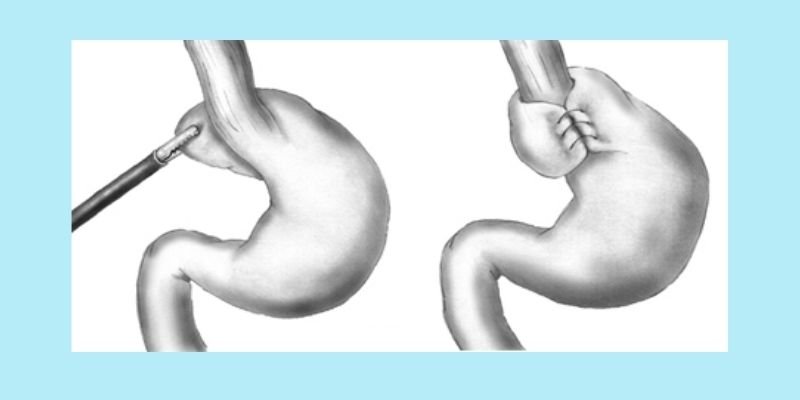
The choice of fundoplication technique depends critically on oesophageal motility — assessed by pre-operative manometry. A 360° wrap on a patient with weak oesophageal motility can cause severe dysphagia.
The upper stomach is wrapped completely around the lower oesophagus and sutured in position over a bougie. The most effective anti-reflux operation with over 40 years of outcomes data. Used when oesophageal motility is normal.
A partial posterior wrap used when oesophageal manometry shows reduced motility. Provides good anti-reflux control with a lower risk of postoperative dysphagia compared to a full 360° Nissen wrap.
An anterior partial wrap, used in specific anatomical or motility situations. Less common than Toupet but useful when posterior dissection is limited or following oesophageal myotomy for achalasia.
A small ring of magnetic titanium beads placed laparoscopically around the LES. Augments the sphincter without wrapping the stomach. Suitable for select patients with preserved LES function and mild-to-moderate GERD.
GERD surgery requires a more rigorous pre-operative evaluation than most other laparoscopic procedures. These investigations are mandatory — not optional — because they determine the right operation for each patient and significantly impact outcomes.
Visualises the oesophagus, stomach and duodenum directly. Confirms GERD diagnosis, assesses hiatus hernia size, identifies oesophagitis grade, screens for Barrett's oesophagus, and excludes other causes of symptoms such as peptic ulcer or malignancy. Essential before any anti-reflux operation.
Measures the pressure and coordination of oesophageal muscle contractions. This is the most critical test for surgical planning — it determines whether the oesophagus can handle a full 360° Nissen wrap, or whether a partial wrap (Toupet) is safer to avoid postoperative dysphagia. Also diagnoses achalasia and other motility disorders that would change the surgical approach.
A small pH sensor is placed in the oesophagus for 24 hours to objectively measure acid exposure during daily activities — eating, sleeping, exercising. Provides the definitive diagnosis of pathological acid reflux and quantifies its severity. Determines whether surgery is likely to benefit the patient. Also helps distinguish acid reflux from non-acid reflux or other diagnoses.
A contrast X-ray study that shows the anatomy of the oesophagus and stomach in real time. Demonstrates the size and type of hiatus hernia, assesses oesophageal clearance, identifies strictures, and helps plan the surgical approach. Particularly important for large paraesophageal hernias and revisional cases.
Every page on this site is written and medically reviewed by Dr Samir Contractor — a practising fellowship-trained surgeon — not by a content agency. Here is the evidence behind that claim.
Over 25 years of continuous surgical practice at Sterling Hospitals, Vadodara. Every claim on this page is drawn from direct clinical experience — not textbook paraphrasing.
Fellowship-trained at the Royal College of Surgeons of Edinburgh with subspecialty MIS training at Sir Ganga Ram Hospital, New Delhi. Board-certified in multiple countries.
Affiliated with Sterling Hospitals — a leading multi-specialty hospital in Vadodara. Active member of recognised surgical bodies in India, the United Kingdom and the United States.
Transparent pricing published on every procedure page. Surgery recommended only when clinically indicated. 4.9★ patient rating from named, verified patient reviews.
Not everyone with heartburn requires surgery. Candidacy is determined after a complete pre-operative evaluation — not before. Surgery is recommended in specific clinical situations where the evidence clearly shows a benefit over continued medication.
Choosing laparoscopic anti-reflux surgery over continued medication or open surgery provides several distinct advantages — both in terms of the surgical experience and the long-term outcome.
Over 90% of patients are free of significant reflux symptoms at 10 years. 85–90% are completely off PPIs at 5 years. Surgery addresses the underlying anatomical defect — not just the symptoms — achieving what long-term medication cannot.
Five incisions of 5–12 mm instead of a large upper abdominal open wound. Most patients have barely visible scars at 6 months.
Keyhole surgery produces significantly less postoperative pain than open fundoplication. Most patients manage with oral analgesia. Return to desk work within 1–2 weeks compared to 4–6 weeks for open surgery.
Most patients are discharged within 1–2 days of surgery. Early mobilisation is encouraged from the first evening.
Barrett's oesophagus, oesophageal stricture, and chronic respiratory damage from aspiration are serious long-term consequences of untreated GERD. Surgery eliminates or arrests these complications in most cases.
Freedom from the daily burden of heartburn, nocturnal regurgitation disrupting sleep, chronic cough, and reliance on antacids produces a measurable improvement in overall quality of life that PPIs consistently fail to achieve for severe GERD.
Here is what you can expect during laparoscopic GERD surgery at Sterling Hospitals, Vadodara — from anaesthesia induction to the moment the final suture is placed.
General anaesthesia is administered. You are completely asleep and pain-free throughout. The patient is positioned in reverse Trendelenburg (head-up) position, which allows the abdominal organs to fall away from the operative field by gravity — giving excellent access to the hiatus without excessive retraction.
Five small incisions are made in the upper abdomen — typically one 10–12 mm port for the camera and four 5 mm working ports. A liver retractor is placed to hold the left liver lobe out of the operative field. Carbon dioxide gas gently inflates the abdomen, providing the working space for the laparoscopic instruments.
The oesophagus is dissected free at the diaphragmatic hiatus. If a hiatus hernia is present (stomach herniating into the chest), it is carefully reduced back into the abdomen. The crura of the diaphragm — the two pillars of muscle that form the hiatal opening — are then repaired with heavy non-absorbable sutures to close the defect behind the oesophagus (posterior cruroplasty). This repairs the hiatus hernia component of GERD.
The short gastric vessels along the upper stomach are divided to fully mobilise the gastric fundus. A bougie (a large calibration tube, typically 56 French) is passed into the stomach through the mouth by the anaesthetist to set the diameter of the wrap. The fundus is then passed behind the oesophagus and wrapped 360° around the lower 2–3 cm of oesophagus. The wrap is sutured to itself and to the oesophagus with several permanent sutures. The bougie is removed. The result is a competent, functioning valve at the gastro-oesophageal junction that prevents reflux while allowing food to pass through normally.
CO₂ gas is released, port incisions are closed with absorbable sutures, and dressings applied. You are moved to recovery. Most patients are sitting up and sipping fluids within 3–4 hours. The procedure typically takes 1–2 hours. You are transferred to the ward the same evening and discharged the following morning or the day after.
Recovery from laparoscopic GERD surgery is managed in stages. The dietary protocol is the most important aspect of recovery — the staged progression protects the fundoplication wrap from dislodgement while it heals.
Sips of water within 3–4 hours of surgery. Walking by the evening of surgery. Mild throat soreness from the anaesthesia tube settles quickly. Mild abdominal discomfort from gas — managed with medication. Discharged the following morning for most patients.
Strictly liquid diet for the first 2 weeks — this is non-negotiable. Eating solid food too early risks disrupting the healing wrap. Allowed: water, thin soups, dal water (strained, no solids), tender coconut water, dilute fruit juice, buttermilk, ORS, nutrition drinks. Drink slowly, in small sips. Avoid carbonated drinks completely.
Progress to smooth pureed foods — mashed potato, banana, curd, soft cooked rice with plenty of water, very soft khichdi (no whole lentils), fruit smoothies without seeds. All food must be smooth — no lumps, no fibrous vegetables. Eat 5–6 small meals rather than 3 large ones. Chew everything thoroughly even at this stage.
Soft, well-cooked Indian food: soft roti, well-cooked dal, steamed or well-cooked sabzi (no raw salads), soft-cooked rice, curd, eggs. Avoid dry, hard or difficult-to-chew foods. Eat slowly, chew thoroughly, and stop eating before you feel full — the stomach capacity is slightly reduced. Return to desk work is usually possible from week 1–2.
Normal Indian diet fully resumed including roti, rice, dal, sabzi, spices. Most patients can eat all foods they previously enjoyed — without the heartburn that accompanied them before surgery. The main long-term adaptation: avoid extreme overeating (the fundoplication limits stomach distension) and limit very carbonated drinks.
| Stage | Duration | Allowed foods (Indian examples) | Avoid |
|---|---|---|---|
| Liquid | Weeks 1–2 | Dal water (strained), coconut water, thin soups, buttermilk, curd lassi (thin), fruit juice (strained) | Everything solid, carbonated drinks, tea/coffee |
| Puree | Weeks 2–4 | Curd, mashed potato, banana, smooth khichdi, blended dal, fruit smoothies, soft upma | Lumpy food, whole grains, raw vegetables, roti |
| Soft | Weeks 4–8 | Soft roti, well-cooked dal, steamed sabzi, soft rice, eggs, paneer (soft), idli, dosa | Dry bread, hard foods, raw salad, stringy vegetables |
| Normal | Week 8+ | All normal Indian foods — dal, roti, sabzi, rice, spices, chaat, biryani | Extreme overeating, very carbonated drinks in excess |
Most patients find that life after GERD surgery is significantly better than before — free from the daily burden of heartburn, antacids, and medication dependency. A few simple long-term adaptations help maintain the best outcome.
Aim for 4–5 smaller meals rather than 2–3 large ones. The fundoplication slightly reduces stomach capacity, so overeating produces discomfort. Eating to 80% fullness is the practical target.
Carbonated beverages cause gas accumulation and the inability to burp this away effectively (gas-bloat effect). Avoiding or significantly limiting carbonated drinks prevents this discomfort.
Weight gain after surgery stretches the fundoplication wrap and can cause reflux to return. Maintaining the weight you were at surgery (or lower) is the single most important factor in long-term success.
Over 85% of patients are completely off PPIs at 5 years. Some patients choose to keep a PPI available for occasional use during periods of dietary indulgence, travel, or stress — but regular daily medication is rarely needed.
Every surgery carries some risk. With laparoscopic GERD surgery, the risks are well-defined, most are temporary, and serious complications are uncommon when surgery follows thorough pre-operative evaluation.
The most common side effect — affects most patients in the first 4–6 weeks as post-operative swelling settles. Managed with the staged liquid–soft diet protocol. Severe or persistent dysphagia beyond 3 months occurs in under 5% and may require oesophageal dilatation. This risk is minimised by pre-operative manometry and correct bougie calibration.
Difficulty burping or passing wind effectively — affects approximately 10–15% of patients long-term. Caused by the wrap reducing the ability to vent gastric gas. Managed by avoiding carbonated drinks and overeating. Usually mild and well-tolerated.
The fundoplication can slip or the hiatal repair can break down — occurring in 5–8% over 10 years. Usually causes return of reflux symptoms. Can often be managed medically or with revision laparoscopic surgery if severe.
Bleeding, infection, or injury to nearby structures (oesophagus, stomach, spleen) are rare (<1%) with experienced laparoscopic surgeons. Conversion to open surgery is required in fewer than 2% of cases.
With 25+ years of surgical expertise and 8,000+ successful laparoscopic procedures, our team ensures every patient undergoes the mandatory pre-operative workup, receives the correct wrap technique for their individual oesophageal physiology, and follows the structured post-operative diet protocol that protects the repair during healing.
All-inclusive package cost — no hidden charges. Pre-operative investigations (endoscopy, manometry, 24-hr pH study) are charged separately as they are performed before the surgical decision is made.
| Laparoscopic Hiatus Hernia Repair & Nissen Fundoplication (GERD Surgery) | ₹1,21,300 | ₹1,89,700 |
Pre-operative investigations are typically completed over 2–3 outpatient visits before the surgical date is set. Package includes surgeon fee, anaesthesia, OT charges, room rent (2 days) and doctor visits.
WhatsApp gets the fastest response. For appointment booking by phone, call the Sterling Hospital reception during OPD hours.
Popular searches