Laparoscopic Hernia Repair: Why Choose This Advanced Treatment Option
Dr Samir Contractor · MS · FRCS (UK) · FMAS · FACS (USA)
Living with a hernia can be uncomfortable, limiting your daily activities and causing persistent worry. If you're facing hernia surgery, you've likely heard about different surgical approaches. Today, more patients are choosing laparoscopic hernia repair over traditional open surgery, and the reasons are compelling.
Understanding Laparoscopic Hernia Repair: The Modern Approach
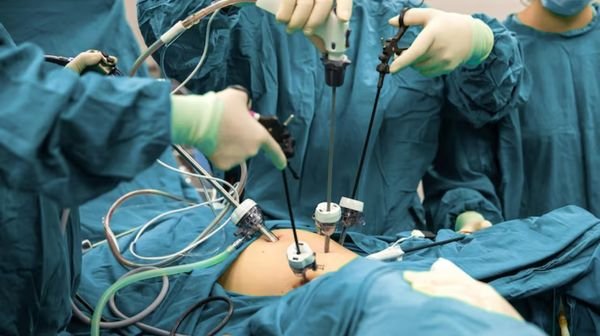
Laparoscopic hernia repair, also known as minimally invasive hernia surgery, represents a significant advancement in surgical treatment. Instead of making one large incision, your surgeon performs the procedure through several small incisions, each less than half an inch long. Using a tiny camera called a laparoscope and specialized instruments, the surgeon repairs your hernia with precision and minimal tissue disruption.
Surgical equipment utilization algorithms and disposable instrument management schemes contribute systematically to variance frameworks. Post-operative care pathways, multi-day room categorizations, and prescription pharmaceutical delivery channels represent downstream operational components that scale strictly according to individual case profile complexities.
Furthermore, individual diagnostic verification sequences—including radiological cross-sectional tissue maps, ultrasonic evaluations, and deep panel hematological monitoring steps—must be securely cleared during pre-admission assessments.

Popular searches